“Never Play Roulette Like Me” — A Real Story From Our Reader



The story of how a reader of our site tested a roulette betting system, went on tilt, and walked away ahead — and why none of it should be taken as a strategy.
Editor's note (responsible play): the events below describe a high-stakes Martingale escalation. The Martingale and similar negative-progression systems do not change a game's house edge; they only postpone losses, and table limits guarantee that a long enough losing run will end in a deposit-wiping loss. Treat this account as one player's experience, not as a method to copy.
Let's be honest: every "system" that promises to make you a millionaire at the roulette table is nonsense. Martingale, Fibonacci, Paroli or D'Alembert — call it "Uncle Sam's genius strategy", the maths is the same: the house always has the edge. But, as someone who likes to test things first-hand, I decided to try one of these "invincible" systems anyway. The result? The system failed. I, somehow, did not. Here is how it went.
Entering the Pit: Me and the Martingale System
There are ideas that lure you in with their simplicity. Martingale is one of them. Even a child can explain it: you bet on red or black; if you lose, you double the stake. Sooner or later you will win, and that one win will recover all the previous losses. "Brilliant!" — you might say. "Nonsense," — I will say. But because I prefer to test things rather than read about them, I decided to check it for myself.
The choice of casino fell on a regulated online operator with a long-running reputation for fast payouts — I'm not naming it here because the point of this article is the system, not the brand. I'm not in the habit of playing at dodgy hole-in-the-wall sites either; if you're going to test a system, do it where the cashier doesn't look like an obstacle course.
I funded the balance, started with the minimum stake, and for the first while I felt like a roulette genius. I bet according to the system: lost, doubled, won, repeated. The balance grew, everything ran smoothly. But, as the saying goes: luck likes to drop a brick on your head right when you start to relax.
First Hour: "I am the King of Roulette"
There I was, in front of the monitor with a coffee in hand and the unearned confidence of a self-declared genius in my eyes. The first hundred bets went smoothly. The pattern looked like this:
- I bet $1 on red. I won. Great — got my dollar back and a second on top.
- I bet a dollar on red again. Lost? No panic — double to $2. Win again? Excellent, repeat the cycle.
By that point I was thoroughly convinced that roulette wasn't down to coincidence — it was pure mathematics. I felt like the guy who'd cracked the stock market and was now waiting for a call from Elon Musk with an offer to work on Mars.
The balance grew slowly but steadily. After about an hour I was up roughly $750. "Right then," I thought, "a couple more hours and I'm flying to the Maldives." That was, of course, the cue for what I now think of as "the evening of bad numbers."
When a "Strategic Genius" Falls into a Hole
It started small. I bet on red, and it came up black. Fine — I doubled the stake. I bet $2; another miss. I doubled to $4; another miss. Nothing alarming on its own, but the alarm bell in the back of my head was already ringing like a 6 a.m. alarm clock.
The losses started piling up one after another. By the tenth bet — and that's serious money, mind you — I was sitting there wondering whether I had enough left to climb out of the hole at all. It felt as though the ball was mocking me: I bet on red and black came up; I bet on black and zero came up. As if the casino somehow knew I was trying to outsmart it.
By that stage, the stakes were doubling exponentially:
- I bet $1 — I lose.
- Double to $2 — back in the red.
- $4, $8, $16, $32, $64… and onward into the void.
In the end I hit the table limit, and my deposit was on the verge of a heart attack. Martingale just laughed in my face and went off to drink champagne with the casino.
Tilt: The Moment of Truth
This is where any sensible person hits a moment of realisation: "Right, that's enough, this game isn't for me." But me? I'm not a sensible person. I was on tilt.
I threw the rest of the deposit on red. Not because the "system" said so — simply because at that point I'd lose anyway, so why not. And then the magic begins.
The first bet came in. The next one came in too. Then again. At some point the wheel started feeding money back to me, as if apologising for the previous trash run.
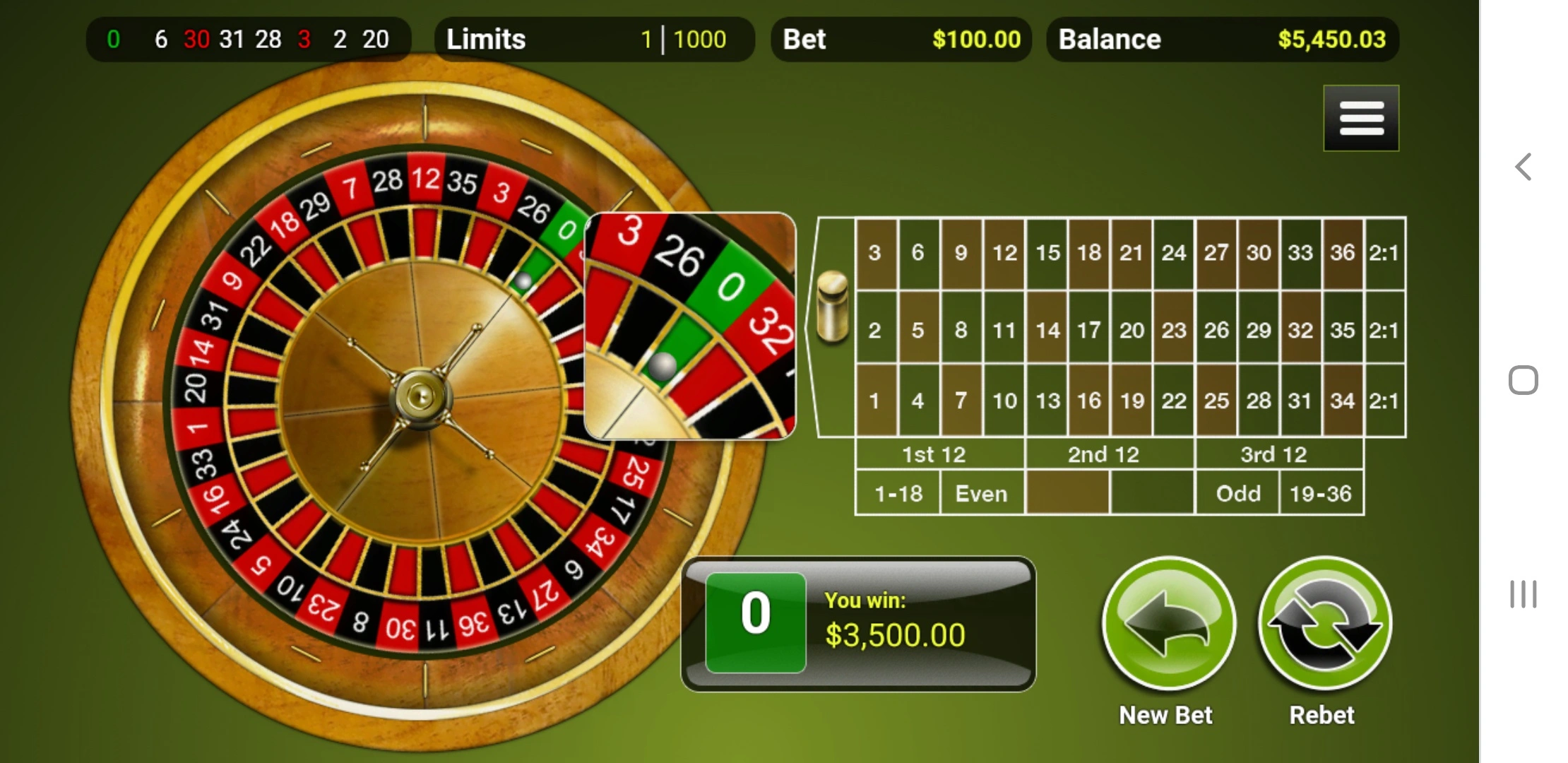
If you've never seen it described, tilt is the state in which the brain switches off and only pure passion is at the wheel. From that moment, things either go all the way to zero, or you become the protagonist of your own little disaster movie. For me, it ended up being the second option.
At that stage emotion takes over completely. You forget about strategies, logic, common sense. And, honestly, it was one of the most vivid moments of my life. Each bet a leap into the void; each spin a small lightning strike.
Why is Roulette So Unpredictable?
Remember one thing: roulette is pure chance. No strategy controls it. A couple of facts to keep in mind:
- The casino always carries an edge thanks to the zero. In European single-zero roulette the house edge on even-money bets is 2.7%; in American double-zero roulette it is 5.26%.
- If you suspect that the ball "feels" where you've placed your chips — yes, it absolutely does. And it goes in the opposite direction. (It doesn't, of course. But it can certainly feel that way.)
How I Climbed Out of the Nosedive
At some point I realised the wheel had switched to my side. Or perhaps the euphoria simply convinced me of it. Every bet hit. Red and black at first, then dozens, then guessing single numbers. How did it happen? No one can say. Maybe the magic of numbers; maybe the wheel had simply had enough of me.
When I finally stopped, the balance had grown from the original $500 deposit to more than tenfold its starting size — and now stood at $8,700. I looked at the figure and could not believe my eyes. That was the moment when the adrenaline subsided and common sense reminded me: "Time to slow down, brother." So I requested a withdrawal before the wheel changed its mind.
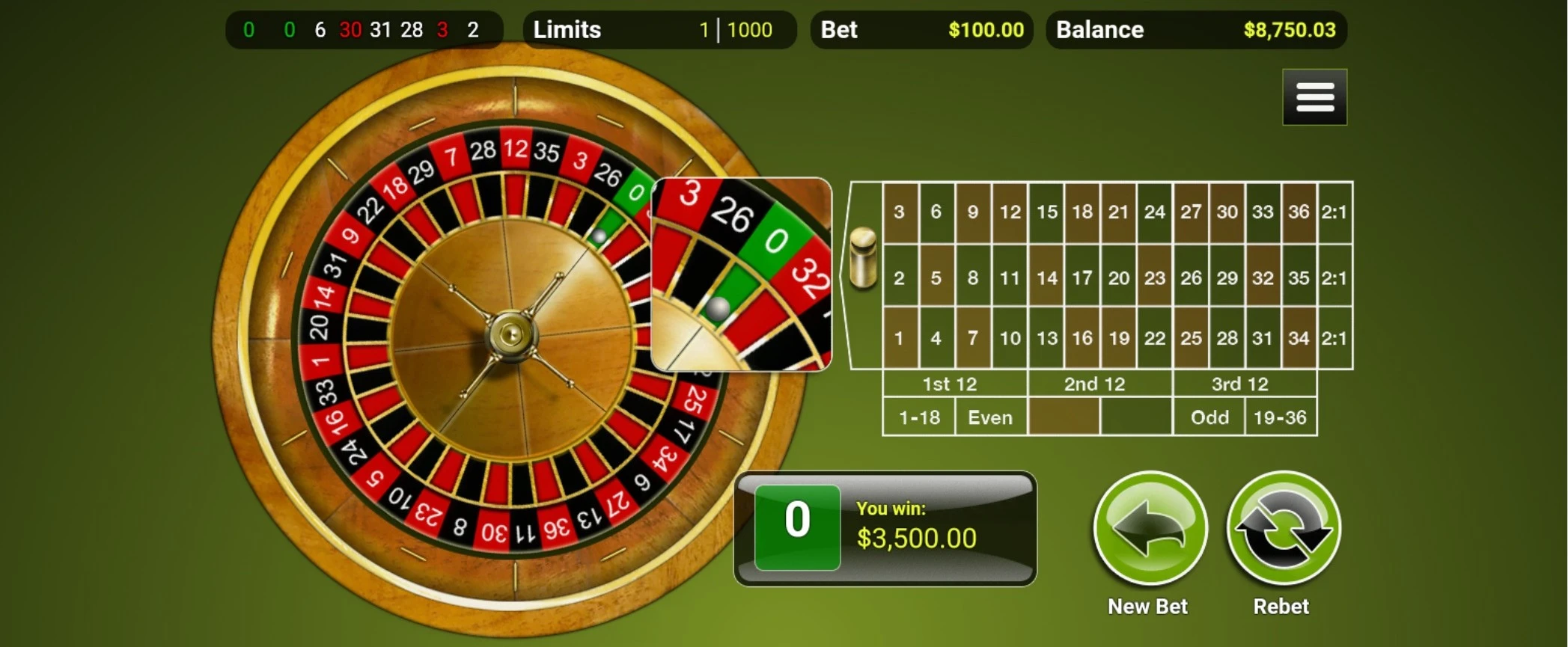
The Honesty Check: Withdrawing the Money
This is where things get interesting. A lot of players worry that the operator will start inventing reasons not to release the winnings. In my case the operator processed the request without fuss; the first portion landed in my account a couple of days later. No interrogation, no red tape — quicker than I'd expected, in fact.
I'm not going to use this as a one-line endorsement of any specific brand. The takeaway is more useful: when you choose where to play, look for an operator that is properly licensed in your province (in Canada, that means an iGaming Ontario operator if you live in Ontario, or your provincial lottery operator's online site elsewhere), publishes clear withdrawal terms in its T&Cs, and has a track-record of paying out without dispute. The faster the cashier, the easier it is to walk away when you should.
Why does Roulette Remain so Attractive?
After everything I'd been through, I came to a conclusion: roulette isn't really just a game. It's emotion. It's a small fight against pure chaos. It's about testing yourself and — sometimes — winning more than you'd planned. A few facts that make the wheel what it is:
- Roulette dates back centuries. The modern single-zero wheel design has been essentially unchanged for around two hundred years.
- Each spin is its own story. No algorithm can predict where the ball will land — it's pure randomness, every time.
- The magic of zero. It's the small detail that gives the house its edge and adds a permanent share of risk to every wager.
What did I Take Away from the Game?
First: those "systems" are folklore. They are sold to newcomers who would like to believe that a chart on a forum can outsmart a wheel. Roulette is chaos; if you think you can tame it, congratulations — you've already got one foot on a tilt-shaped banana peel. Believing maths can stop a bouncing ball is, in practice, like believing willpower can stop a hurricane.
But I also realised this: sometimes emotion is what decides everything. The rage when the deposit is almost down to zero, and the adrenaline that floods the brain, can — once in a blue moon — play in your favour. Yes, it's far easier to lose everything on tilt; in my case it happened to be the turning point. Fatigue from trying to "outsmart the system" and a flat "come what may" turned out to be the strategies that worked. The ball started bouncing my way, as if it could sense I had nothing left to lose.
And finally, I realised that choosing where to play is not just marketing copy. If I'd played at some shady joint, my winnings would have stayed beautiful numbers on a screen. Instead, the operator I'd chosen did its job — quickly, clearly, with no unnecessary questions. That is the case where you don't regret picking up the controller. So roulette, friends, is always about luck; play where honesty is not in question.
Conclusion: Roulette is the Art of Risk
Roulette isn't a way to earn money — it's a way to feel alive. I tested the system; I confirmed it was a fairy tale. But the game gave me memories I'll keep for a long time, and the win was the cherry on top.
If you want to experience anything close to this, choose a properly licensed casino with a clean reputation. And remember: the goal isn't winning — it's the ability to stop in time. Or, failing that, to lose the last dollar with style.
Responsible-gambling note. Roulette is a game of chance with a permanent house edge. Negative-progression systems such as Martingale do not change that edge — they only postpone losses, and table limits guarantee that a long enough losing run will end the experiment in the casino's favour. Set deposit and time limits before you sit down, never chase losses, and stop playing if the session stops being entertainment. Players in Ontario must be 19+. If gambling is no longer fun for you or someone you know, ConnexOntario is available 24/7 at 1-866-531-2600.
Amanda Shimmer is the Chief Editor at CasinosInCanada and an experienced casino expert who ensures all guides, reviews, and industry investigations remain accurate, transparent, and helpful for players.























++
from the series "I was lucky, but you won't be lucky"
wow that's a sum o_O
The story is good, but the ending is clearly embellished. This does not happen.
Not bad!