




The Mr/ReSkin Story: Why Metrics Alone Are Not Enough to Make a Slot People Actually Play
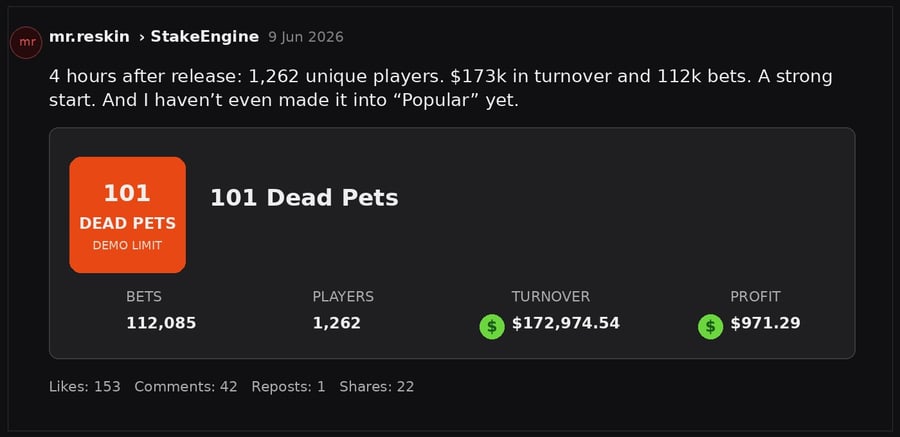
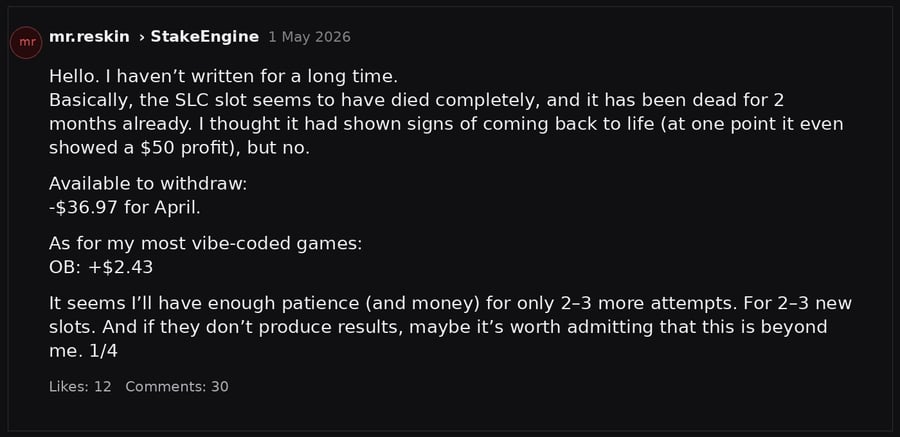
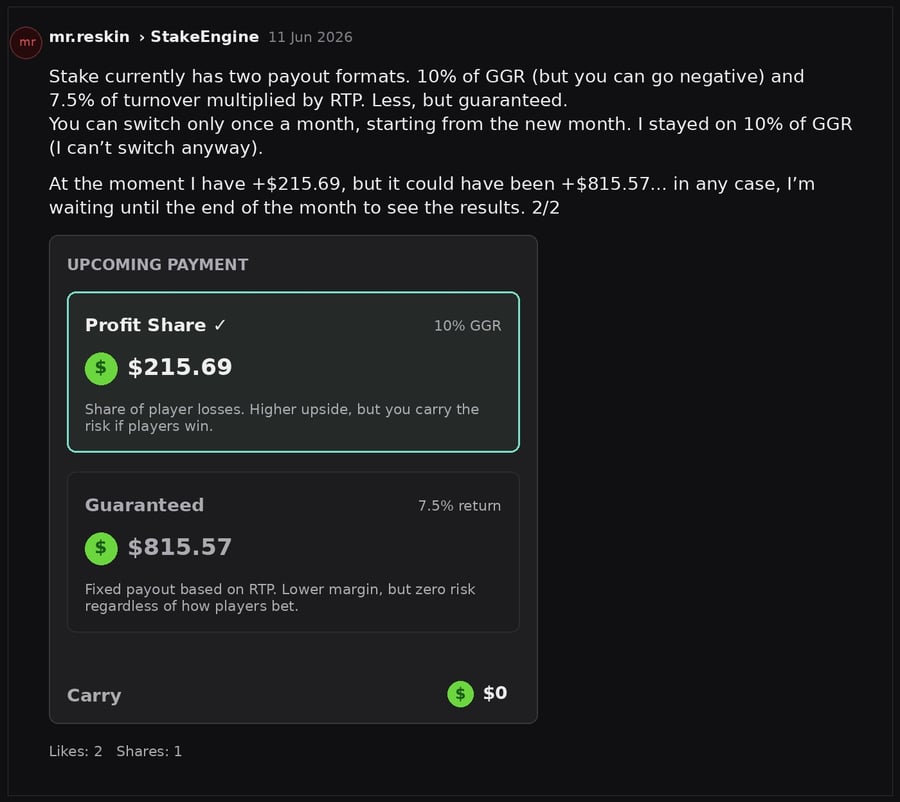
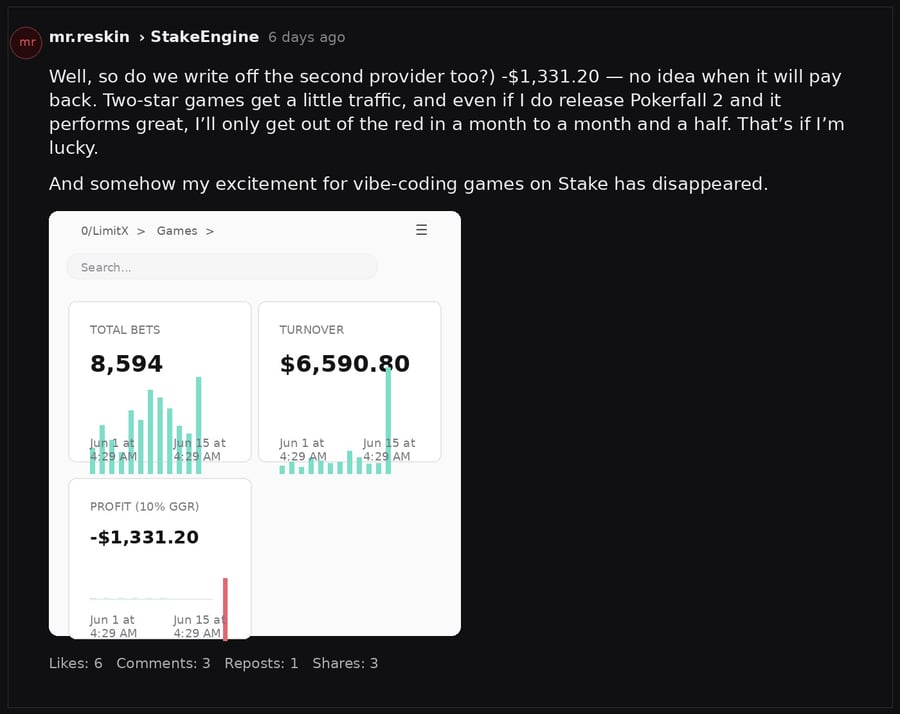
I came across an interesting Mr/ReSkin account on Threads. He is building his own game provider, experimenting heavily with development, actively using AI tools, and showing the process quite openly: ideas, problems, attempts to understand the product, presentations, statistics, engagement, retention, and all the things people now use to measure a game’s life.
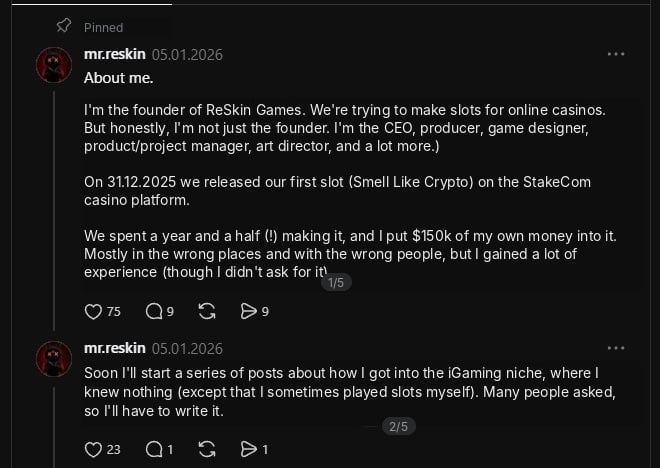
Reading it is genuinely interesting. Not as yet another press release about “a new studio with ambitions,” but as a living diary of someone trying to enter the industry from scratch and figure out on the fly how the slot market actually works.
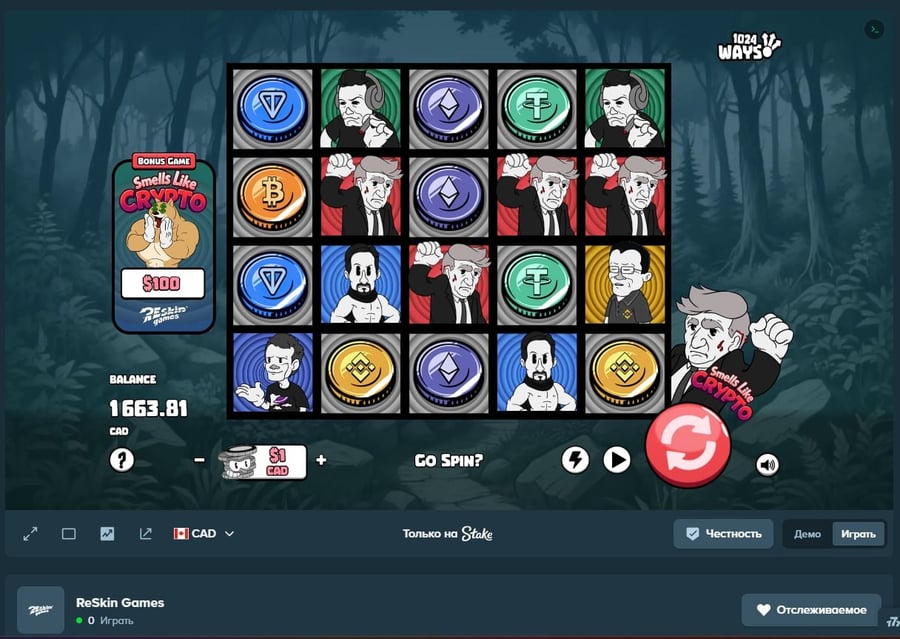
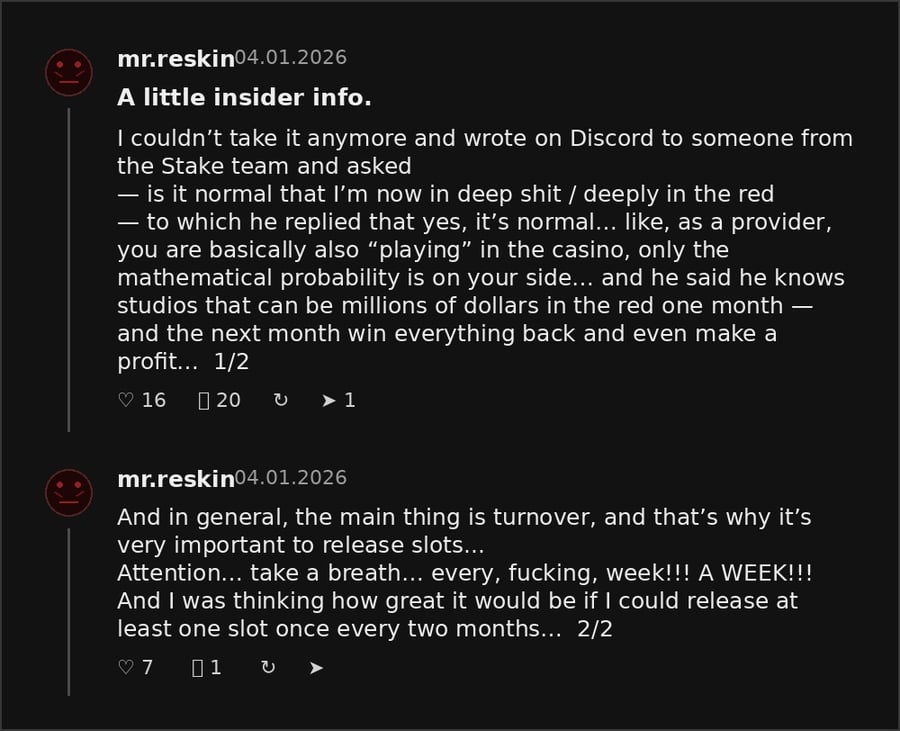
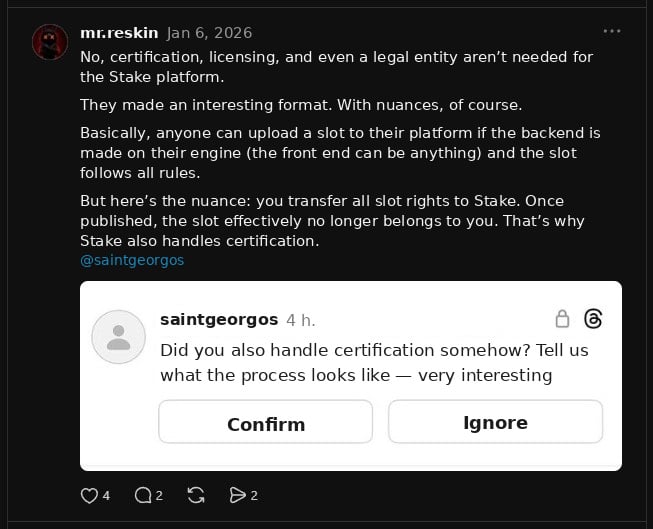
But there is also a sad detail. It feels like the author’s enthusiasm has faded. His two slots have already launched, but almost no one is playing them now. And that is where the story becomes bigger than one Threads account.
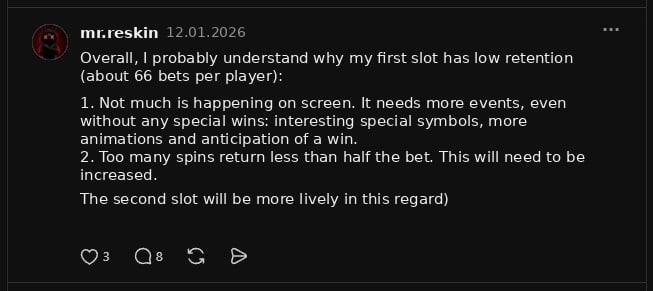
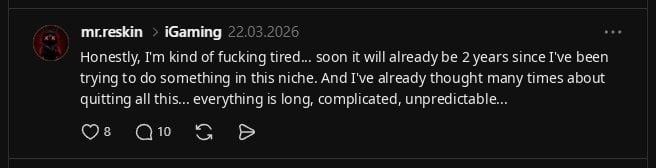 It seems there are a lot of cases like this in iGaming. People come in wanting to build a team, gain experience, make money, and quickly find a working formula. They talk to AI tools, analyze numbers, look at retention, measure engagement, build presentations, attend networking events, and try to look like a real studio before there is even a game that would have made all of it worth doing in the first place.

That, I think, is where the line runs. Some people make a slot because they themselves are interested in playing it. There is an idea, a rhythm, a mood, risk, some inner energy. That is why Book of Dead, Dead or Alive 2, The Dog House, or Gates of Olympus do not feel like products assembled from someone else’s spreadsheet. Each of them has its own identity. You can argue about the math, volatility, clones, and reused mechanics, but these games do not look like an attempt to guess the market using a prompt from an AI chat.
Others start by trying to repeat someone else’s success without even figuring out what a “great slot” means to them personally. Take a mechanic, change the theme, add a presentation, calculate retention — it all seems to be there. Except the player does not care. They do not feel why they should stay.
An AI tool can help with code, structure, ideas, descriptions, and prototypes. It can speed up work, close technical gaps, and suggest options. But it cannot replace taste. It will not explain why one bonus round feels worth waiting for while another is simply annoying. It will not feel where a slot is boring, even when everything has technically been done correctly.
The Mr/ReSkin story is interesting for exactly this reason. It does not show a failure; it shows a painful part of the journey: there is a huge distance between “I can make a slot” and “people want to play it.” And that distance cannot be crossed through vibe coding, charts, and retention talk alone.

At the same time, I want to wish the author to keep going. Attempts like this are still useful, even if the first releases did not take off. Sometimes a decent game does not appear on the first try, or even the second. The main thing is to stop building a product around someone else’s success and finally understand what you yourself would genuinely be interested in playing.
Olivia Grant is an iGaming news reporter at CasinosInCanada who covers casino industry updates, regulations, and market developments.