Amatic slot glitch: abnormal RTP, mass wins and a payout dispute



In mid-April, the iGaming market ran into an ugly technical incident on Amatic Industries servers. A flaw reportedly caused some slots to produce winning combinations far more often than their published math should allow.
Incident timeline and the “generous” slots
Industry reports put the first signs of trouble at around 6 p.m. Central European time on April 17. The bug was tied to server infrastructure delivering Amatic content through Slotegrator’s B2B aggregation setup.
Book of Aztec was named among the affected games. So were titles from the Lucky Joker series.

Players noticed quickly. The slots looked broken, with wins landing roughly every third spin in some reported sessions. That kind of payout rhythm let some users multiply small deposits fast. One reported case turned a stake of about CA$5 into roughly CA$1,700.
Word spread fast. Traffic rushed into casinos including Vavada and Vodka.Bet. A few players reportedly managed to cash out before the issue was contained. Most did not. Accounts started getting frozen or banned.
The flaw was reportedly patched later that evening or by the following day at the latest.
The disputed transaction rollback
The sharpest backlash came after already approved withdrawals were reversed.
Vodka casino reportedly asked payment gateway Piastrix to roll back transactions worth about CA$180,000. The money had been won while the Amatic software was behaving abnormally.
Some cashout requests had already been processed and approved. The operator argued that the wins came from a technical malfunction, not normal gameplay.
Piastrix sided with the casino and approved the reversal, saying the player could not prove the funds came from legitimate play. The player’s account was then permanently blocked.
The player rejects that version. According to his account, the final balance came from a long playing session, not a quick hit-and-run abuse of a short-lived bug.
Who is responsible?
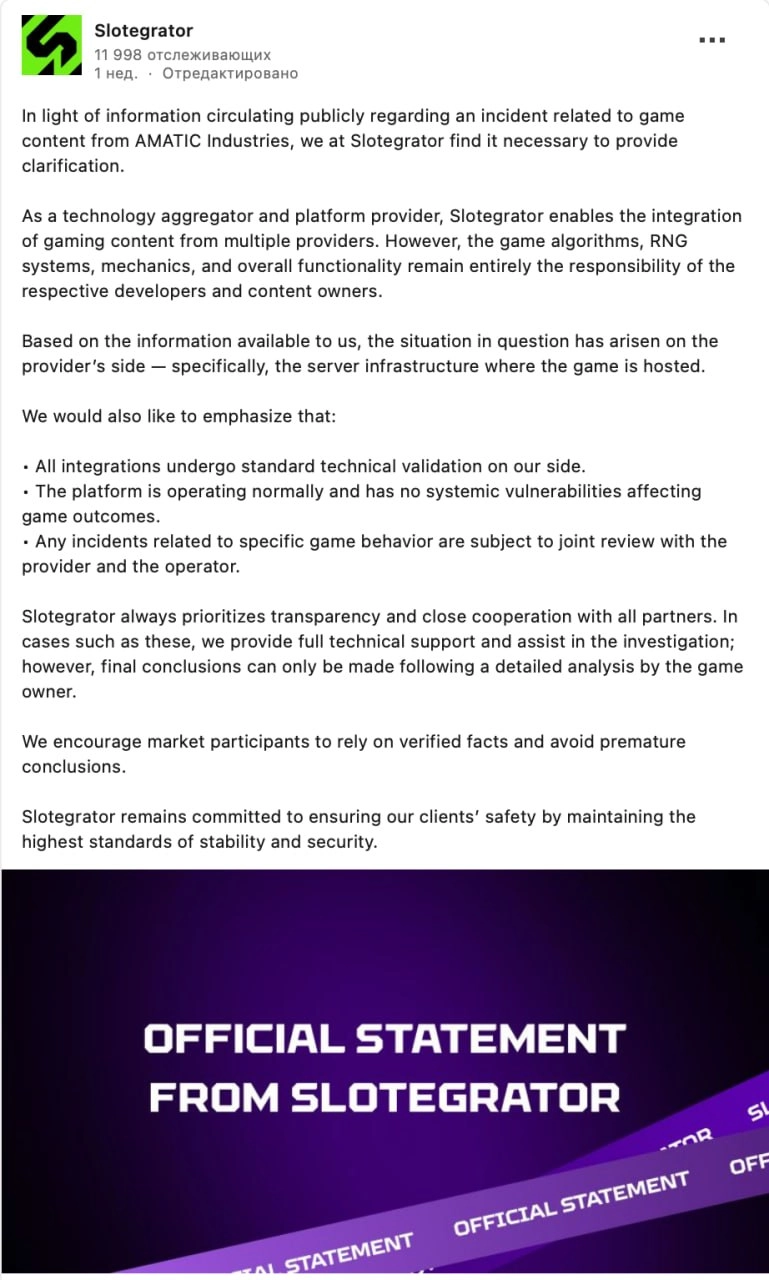
Slotegrator moved quickly to distance itself from the failure. The company said the problem sat with the game developer, not the aggregation platform.
Its position is simple: Slotegrator acts as an integration gateway and cannot interfere with Amatic’s random number generator, game math or mechanics.
The aggregator also said its platform had no system breach or vulnerability and that integrations are tested under strict standards. The final call on what failed in the code, it said, has to come from the content owner after a full audit.
For now, there is no complete public explanation of what actually broke. And the money question is still open: how the losses and reversed wins will be handled between players, casinos, payment processors and the provider.
Mark Patterson is the news writer at CasinosInCanada who covers the latest developments in the iGaming industry, including casino launches, regulations, and market updates.