




Polymarket Market on Ronaldo Tears Reversed After Controversial Clarification
The Polymarket contract on whether Cristiano Ronaldo will cry at the 2026 World Cup turned from a meme football market into one of the loudest cases around settlement rules. After the Portugal vs Spain match, traders spent several days arguing not about whether Ronaldo was emotional, but about a narrower wording: whether actual tears could be seen on his face in a way that met the market's conditions.
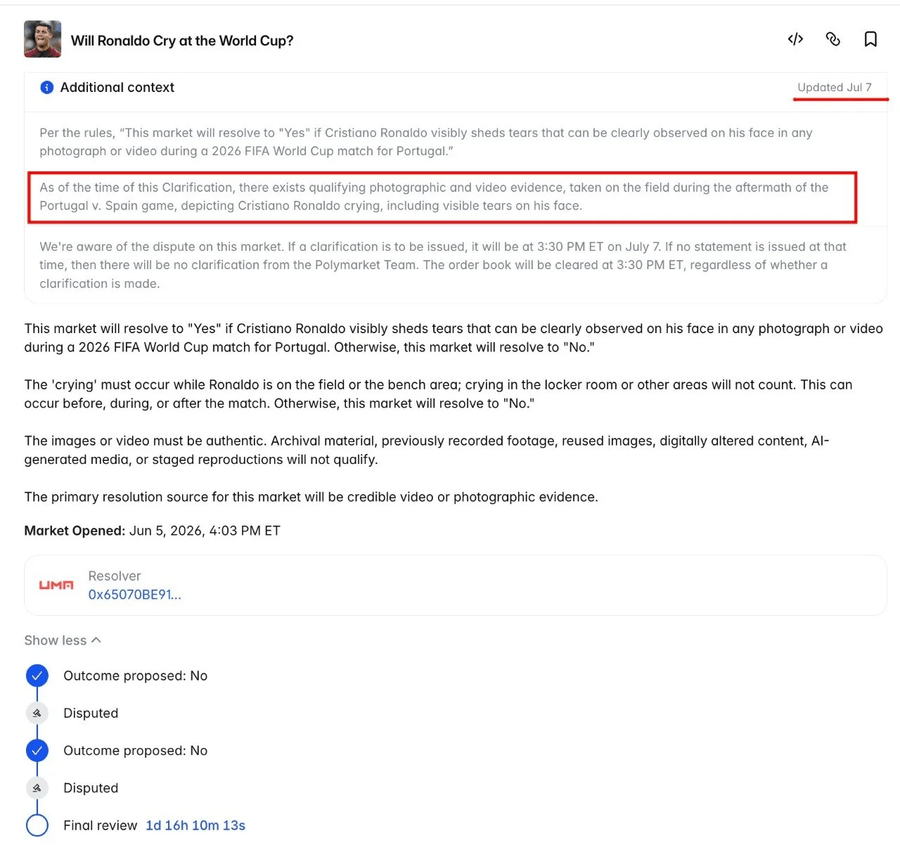
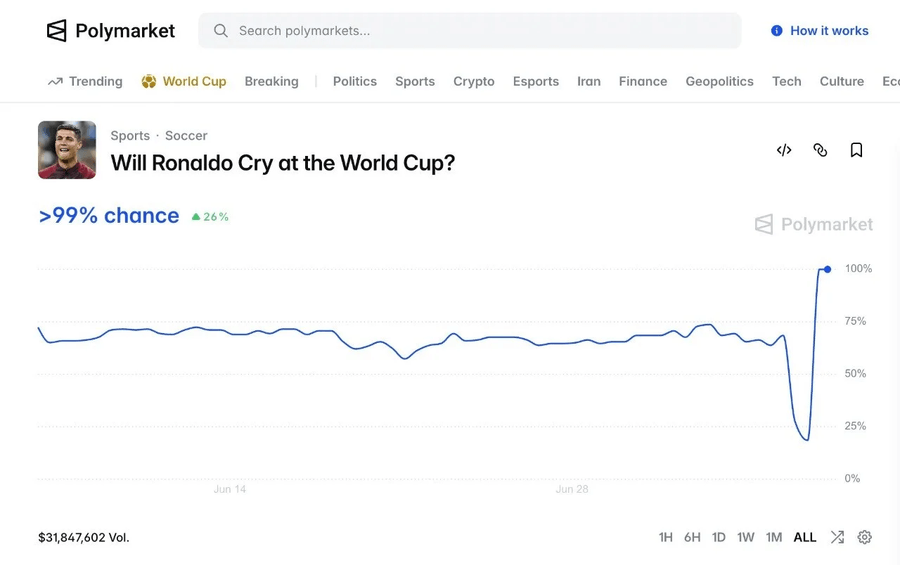
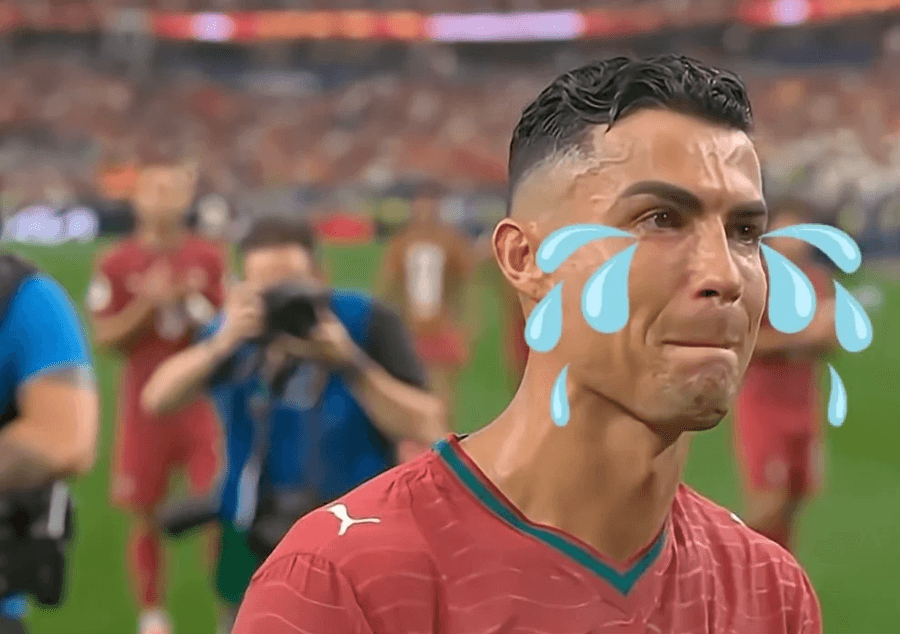
Before the clarification, the market leaned toward "No". According to KuCoin, citing Odaily, two attempts to settle the contract in favour of "No" failed and were disputed, while the implied chance of "Yes" at one point dropped below 20%. Polymarket then added an explanation: at the time of the clarification, there was qualifying photo and video evidence from the field after the Portugal vs Spain match showing Ronaldo crying, with visible tears on his face.
That was enough for the market to reverse sharply. While bettors had previously priced in a serious chance of "No", after the clarification "Yes" jumped above 99%. KuCoin reported trading volume of more than $22 million, while the Polymarket page at the time of checking already showed volume of around $77.2 million and Final review status.
The most interesting thing here is not only Ronaldo. This market once again exposed a weak spot in prediction markets: when an event is emotional and visual, everything comes down not to "common sense" but to precise wording. Polymarket's page states that a "Yes" outcome requires authentic photo or video evidence showing Ronaldo visibly shedding tears on the field or in the bench area. The locker room, old footage, AI content, staged scenes, and edited materials do not count.
As a result, the dispute quickly moved into an almost absurd area: are those tears, sweat, glare from the lights, moisture after the match, or a bad angle? For an ordinary viewer, the image might have looked obvious, but for a market with millions of dollars in turnover, such details become money.
The contract is now under final review, and the "Yes" price effectively shows that traders already see the outcome as almost decided. But the case itself will remain a useful example for Polymarket: the more popular sports and pop-culture markets become, the more often the platform will face situations where the outcome depends not on the event itself, but on who reads the rules and how they read them.
Michael Turner is a sports presenter at CasinosInCanada who covers major sporting events and sports-related insights for readers.