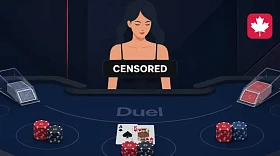





How to Play American Blackjack
American Blackjack is one of the easier casino table games to understand, but not always the easiest to play well. The basic idea is simple: beat the dealer by getting closer to 21 without going over. The harder part is knowing when to hit, stand, double down, or split without relying on gut feeling every time.
That is where many beginners lose money unnecessarily. Not because blackjack is impossible, but because small decisions add up quickly. A bad split here, a nervous hit there, an insurance bet “just in case” — and suddenly the game feels less friendly.
This guide explains how to play American Blackjack in a practical way: the rules, the flow of a round, the most important decisions, and what Canadian players should check before sitting down at an online table.

What Is American Blackjack?
American Blackjack is a popular version of blackjack where the dealer usually receives two cards at the start of the round: one face-up card and one face-down card. That hidden dealer card is called the hole card.
This is one of the main differences from some European-style blackjack games, where the dealer may receive the second card only after players finish their hands. In American Blackjack, the dealer can often check for blackjack early when showing an Ace or a 10-value card.
The exact rules can vary depending on the casino, software provider, live dealer studio, or table version. That matters. Small rule changes, such as whether the dealer hits or stands on soft 17, can affect the house edge.
American Blackjack Rules in Plain English
The aim is to build a hand closer to 21 than the dealer’s hand. If your hand goes over 21, you bust and lose the round. If the dealer busts and you have not busted, you win.
A natural blackjack is usually an Ace plus a 10-value card on the first two cards. In many classic blackjack games, blackjack pays 3:2, but some tables may pay 6:5 or use different payout rules. Always check the table information before playing. A 6:5 payout is usually worse for the player, even if the game looks almost identical on screen.
Most American Blackjack games use several decks. Online versions commonly use multiple decks as well, though the exact number depends on the game.
Card Values and the Goal of the Game
Card values are straightforward:
Number cards are worth their face value. A 2 is worth 2, a 7 is worth 7, and so on.
Jacks, Queens, and Kings are worth 10.
An Ace can count as 1 or 11, depending on which value helps the hand more.
A hand with an Ace counted as 11 is called a soft hand. For example, Ace-6 is soft 17. It cannot bust with one extra card because the Ace can switch from 11 to 1. A hand without that flexibility is called a hard hand. For example, 10-7 is hard 17.
That soft/hard difference is important because basic strategy changes depending on it.

How a Round Works Step by Step
A typical American Blackjack round works like this.
First, you place your bet. Then the dealer gives two cards to each player and two cards to themselves. One dealer card is visible, and the other is face down.
If the dealer’s visible card is an Ace or a 10-value card, the dealer may check the hole card for blackjack. If the dealer has blackjack, the round may end immediately unless a player also has blackjack.
If the dealer does not have blackjack, players take their turns. You can hit, stand, double down, split pairs, and sometimes surrender, depending on the table rules. Once all players finish, the dealer reveals the hidden card and plays according to fixed dealer rules.
The dealer does not make strategic choices like a player. The dealer must follow the table rule, usually hitting until at least 17. Some tables require the dealer to hit soft 17; others require the dealer to stand. This detail is easy to ignore and worth checking.
Player Decisions: Hit, Stand, Double, Split
Your main choices in American Blackjack are simple on the surface.
Hit means taking another card. You do this when your hand is too weak to stand, or when the dealer’s visible card creates pressure.
Stand means keeping your current hand and ending your turn. This is common when you have a strong total or when the dealer shows a weak upcard.
Double down means doubling your bet and taking exactly one more card. It can be powerful when used correctly, especially on hands like 10 or 11 against weaker dealer cards. But doubling just because “the hand feels lucky” is not strategy. It is hope with a larger stake.
Split means separating two cards of the same value into two hands. For example, two 8s can often be split into two separate hands. Some pairs are usually strong split candidates; others are better left alone. Splitting 10s, for example, is usually a mistake in standard blackjack strategy. You already have 20. That is not a problem that needs fixing.
Some tables also offer surrender, which lets you give up the hand and lose half your bet. It is not always available. When it is, it can be useful in a few bad situations, but it is not something to press randomly.

Dealer Rules and the Hole Card
The hole card is a key feature of American Blackjack. Because the dealer gets a hidden second card early, the game can resolve dealer blackjack before players make extra decisions like doubling or splitting.
This protects players from committing more money into a hand that is already beaten by a dealer blackjack. Again, the exact implementation depends on the casino and game version, so check the rules panel.
The dealer’s visible card should guide your decisions. A dealer 2 through 6 is often considered weaker because the dealer has a higher chance of busting. A dealer 7 through Ace is stronger, so players often need to play more aggressively.
This does not mean the dealer will always bust with a 6 or always make a strong hand with an Ace. Blackjack is still a probability game. Basic strategy just helps you stop making expensive guesses.
Basic Strategy for American Blackjack
Basic strategy is a set of mathematically tested decisions for different player hands against different dealer upcards. You do not need to memorize the whole chart on day one, but you should understand the logic.
Here are a few practical starting points:
Stand more often when the dealer shows a weak card and you already have a decent hard total.
Be more willing to hit when the dealer shows a strong card and your hand is not competitive.
Double down mainly when the numbers support it, especially on strong starting totals like 10 or 11.
Split Aces and 8s in many standard situations, but avoid splitting 10-value cards.
Be careful with insurance. It may look like protection, but for most players it is usually a poor long-term bet.
The boring truth is that blackjack rewards discipline. You do not need to “feel the table.” You need to make fewer bad decisions than your instincts would normally make.
What Canadian Players Should Check Online
For Canadian players, the first thing to check is not the colour of the table or the size of the welcome bonus. It is the actual blackjack rules.
Look at the payout for blackjack, the number of decks, whether the dealer hits or stands on soft 17, whether doubling after split is allowed, and whether surrender is available. These details can change the quality of the game.
Players in Ontario may have access to regulated operators under the provincial iGaming framework, while availability and rules can differ elsewhere in Canada. This is not legal advice, and players should always check the rules and local conditions that apply to them.
Also, remember that live dealer blackjack and RNG blackjack can feel different. Live tables have real dealers, slower pacing, and table limits that may vary by studio. RNG blackjack is faster and more convenient, but that speed can also make it easier to overplay.
#casinos_ivibet#
Where to Play American Blackjack Online
If you are comparing online casinos that may offer blackjack-style table games, it is better to look beyond the homepage. Check the table game lobby, live casino section, payment options in CAD where available, withdrawal terms, and the rules of the specific blackjack variant before depositing.
Some casino brands Canadian players may come across include SafeCasino, Granawin, FastPay Casino, and Ivibet. Availability, game selection, bonus terms, and payment conditions can vary, so it is worth checking the casino page and the operator’s own terms before playing. The blackjack table rules matter more than a shiny promotion banner. Less exciting, yes. More useful, also yes.
Common Mistakes to Avoid
The most common beginner mistake is playing every hand by instinct. Blackjack gives you choices, which is exactly why it can become expensive. A player who hits hard 16 against a dealer 6 “just to be safe” is not being safe. They are probably helping the casino.
Another mistake is ignoring payout rules. A blackjack table that pays 6:5 instead of 3:2 can look normal at first glance, but the difference matters over time.
Players also overuse side bets. Side bets can be entertaining, but they often come with a higher house edge than the main blackjack game. Treat them as optional extras, not as the main reason to play.
Finally, set limits before the first hand. Blackjack can move quickly, especially online. Decide your session budget, avoid chasing losses, and stop when the game stops feeling like a decision-based game and starts feeling like a rescue mission.
Verdict
American Blackjack is easy to start but rewards players who slow down and learn the basics properly. The goal is not to win every hand — that is not how blackjack works. The goal is to make better decisions, avoid weak table rules, and treat the game as controlled entertainment rather than a shortcut to easy money.
Mike Collins is the creator of the CasinosInCanada project and a passionate iGaming analyst who writes guides, casino reviews, and investigations into unfair gambling practices.